
Begin a Rosenberg Residents Directory Search
Start with the most stable fact available. An address points toward the Fort Bend Central Appraisal District parcel record and county mapping. A full name may lead to an Official Public Records entry, a court party search, an obituary, or a directory volume. An older address usually needs a directory year, a map, or a deed legal description before it can be matched to a modern parcel. Rosenberg searches cross City, county, and state systems, so an apparent city address can still involve a Fort Bend custodian.
Keep the roles separate from the beginning. A property owner, tax-mailing contact, occupant, contractor, voter, registered agent, court party, and directory subscriber can be different people. A positive result is a lead until a second, independent record matches it. The absence of a result can also mean an index has a spelling difference, a date gap, a restricted file, or another custodian.
- Normalize the name or address, keeping unit, directional prefix, ZIP, former name, and historic spelling as separate notes.
- For a current parcel question, search FBCAD by address, owner, Quick Ref ID, or Geographic ID, then compare the legal description with county mapping.
- For a recorded transfer or older ownership lead, search the County Clerk index in both grantor and grantee roles.
- For a historical household, check the library, UT Austin, and Texas State Library catalog holdings by directory year and place name.
- When a record is not online, send the proper custodian a defined request with a record type, address or case number, and date range.
Where Rosenberg Resident Records Are Held
Fort Bend County offices hold many records that function as resident leads for Rosenberg, while City offices hold municipal material and Texas agencies hold statewide systems. The County Clerk is the recorder and custodian for official public records, county-court material, marriage licenses, and local birth and death services. FBCAD maintains the appraisal and parcel view. Elections maintains registration administration and precinct material. Each office has its own coverage, request route, and privacy limits.
Fort Bend County Clerk
Recording Division
301 Jackson Street
Richmond, TX 77469
281-341-8685
Fort Bend Central Appraisal District
Appraisal and parcel roll
Owner, address, ID, and advanced-property routes
The County Clerk’s online-records page is a starting point for the distinct services and record families held by that office.
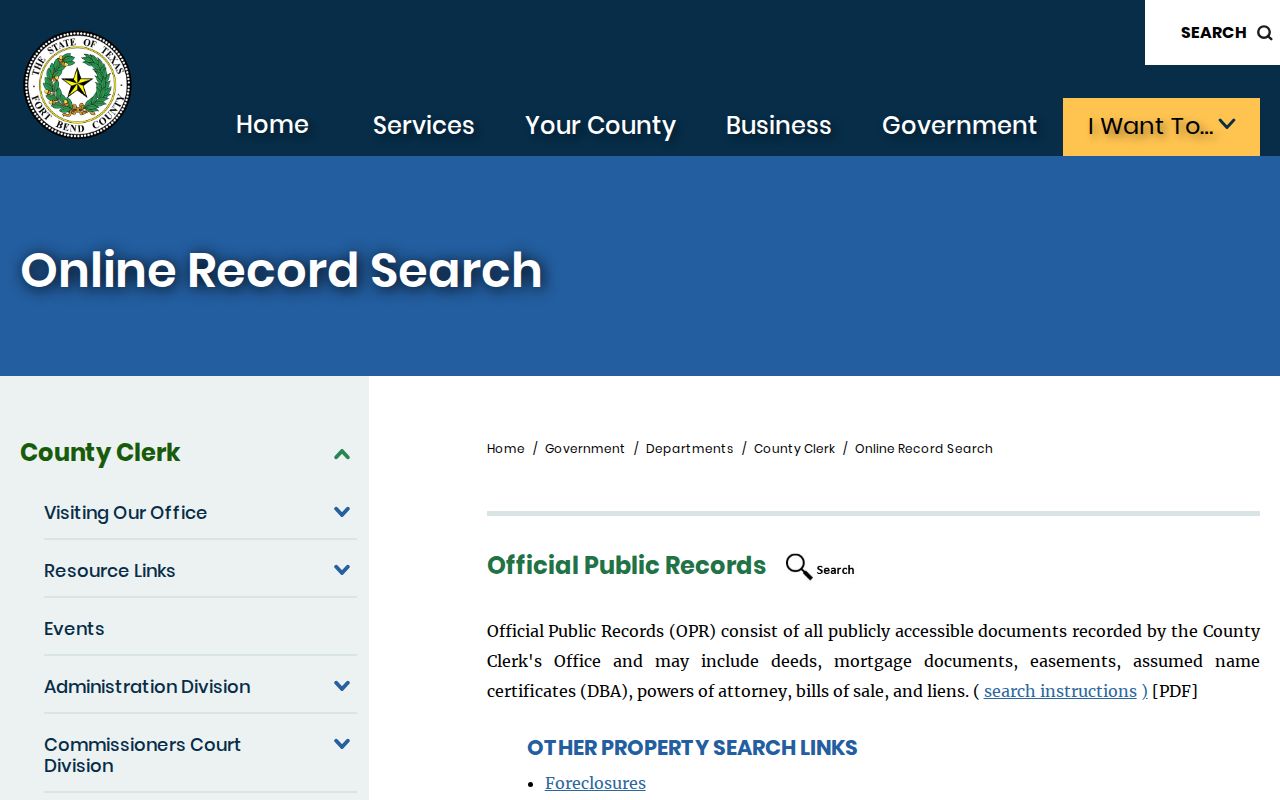
The Clerk’s Official Public Records library reaches from 1821 to the present and includes recorded instruments such as deeds, liens, easements, powers of attorney, bills of sale, and assumed names. An index entry is not a current-title opinion or proof of who occupies an address.
FBCAD Fields for Rosenberg Residents
FBCAD is the main current property lead for a Rosenberg residents directory search. Its public search has By Owner, By Address, By ID, and Advanced routes. The advanced form exposes owner, street number, street name, Quick Ref ID, Geographic ID, subdivision, neighborhood, property type, tax year, and related fields. The help material advises simplifying an address when it does not return a result, and it notes that a name such as McDonald may appear with a space.
| FBCAD field | Field type | How it helps |
|---|---|---|
| Owner Name | Text | Find an appraisal display by a simplified owner name |
| Street Number and Street Name | Text | Locate a situs address; omit street type when the help guidance calls for it |
| Quick Ref ID or Geographic ID | Identifier | Go directly to a parcel when the identifier is already known |
| Subdivision, Condo, or Neighborhood | Autocomplete or text | Narrow a broader Rosenberg property search |
| Property Type and Tax Year | Dropdown | Refine the appraisal context; displayed options may vary |
A useful parcel note records the owner display, owner mailing address, situs address, legal description, subdivision or abstract, value fields, taxing units, map reference, and certification status separately. Mailing and situs addresses are not interchangeable. FBCAD calls its data informational, and its current map excludes some personal, mineral, and mobile-home property. Older GIS data can require a public-information request.
Rosenberg Maps, Limits, and ZIPs
Rosenberg is inside Fort Bend County, but a search result can sit in a City, county, ETJ, postal, precinct, MUD, or drainage boundary that does not match the familiar mailing label. The City’s addressing guidance identifies 77471 and 77469 within its jurisdiction, while making clear that USPS assigns ZIP codes. Use USPS to normalize delivery information, then compare the parcel with the current City Map Room, county mapping, and FBCAD taxing units before assigning a municipal office or court.
The county public map has parcel, subdivision, MUD, County Assistance District, floodplain, road, and plan layers. The City Map Room adds city limits, ETJ, annexations, plats, planning layers, and council districts. These maps explain a place. They are not a survey, title record, or proof that a person lives at a mapped point.
Census QuickFacts for Rosenberg supplies city-level context rather than an individual directory.
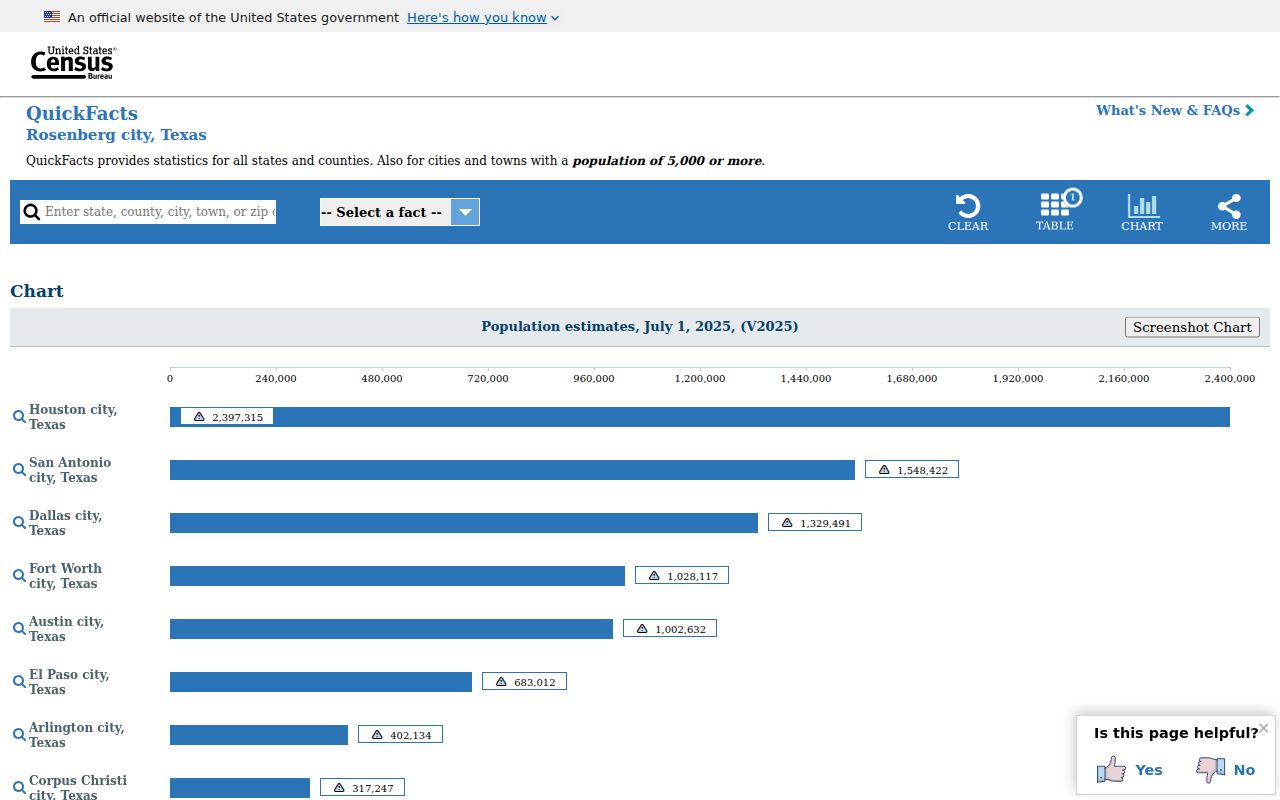
Population and growth data can help frame the scope of a search, but they do not identify a household or establish a person’s address.
Current Rosenberg Resident Sources
Current records in the Rosenberg residents directory are best treated as focused sources, not as one master roster. The right starting point depends on whether the question concerns a parcel, a recorded act, a defined public event, a business connection, or community context. Sources can be public yet still omit occupants, protected records, or older material.
| Source | What It Can Show | Custodian | Access |
|---|---|---|---|
| FBCAD property roll | Owner display, situs, legal description, value and taxing-unit context | FBCAD | Free public search |
| County Clerk OPR | Parties and details for recorded instruments | Fort Bend County Clerk | Public index and image access where available |
| Voter-registration route | Individual self-lookup and precinct administration | Fort Bend Elections | Personal lookup; separate regulated state request route |
| City resource directory | Public departments and community-service contacts | City of Rosenberg | Free category, first-name, and last-name search |
| HOA management certificates | Association and management-contact leads | Texas HOA certificate system | Free search with completeness warning |
The property roll is usually the best current parcel lead. The OPR index is useful for a recorded deed or lien. The individual voter form is not an open directory. An HOA certificate is a contact record, not a member roster. When the goal shifts to a specific person, the Rosenberg Resident Lookup uses a separate verification path.
Rosenberg Voter Records Stay Limited
Fort Bend’s View My Voter Registration form presents a search-method selector with VUID, date-of-birth, first-name, and last-name inputs. It is designed as an individual self-lookup. The county elections office also maintains registration administration, precinct tools, election files, and results archives. None of those public functions support treating the voter system as a casual house-by-house list.
The Texas Secretary of State has a different public-voter-information request process. It permits selected active, suspense, or cancelled records and geography filters, but requires a requester’s full street address, phone, a $75 deposit, and a notarized affidavit against advertising or promoting commercial products or services. Texas does not register voters by party. Participation in a primary does not establish a permanent political affiliation.
Fort Bend Elections and Voter Registration provides the county’s official entry point for current voter and precinct information.
Election Code §13.004 protects specified identifiers, and the Texas Address Confidentiality Program may substitute an eligible participant’s address. Do not try to rebuild a protected residence from maps, parcel records, or other public clues.
Rosenberg Public Request Routes
The Texas Public Information Act, Government Code Chapter 552, generally makes public information available during normal business hours, subject to statutory exceptions. A requester usually need not give a reason, but the governmental body is not required to create a new record or answer a broad research question. A focused request identifies the likely custodian, a record type, an address or case number, a date range, and the preferred delivery format.
For City-held material, Rosenberg’s Forms and QuickLinks route separates Police Records, Municipal Court Records, and General Records. Use the category that fits the custodian. Permit, planning, code, meeting, or general City material may require the General Records route; the City municipal-court option is distinct from Fort Bend County Clerk or District Clerk files.
Rosenberg’s public-information forms identify the City request channels.
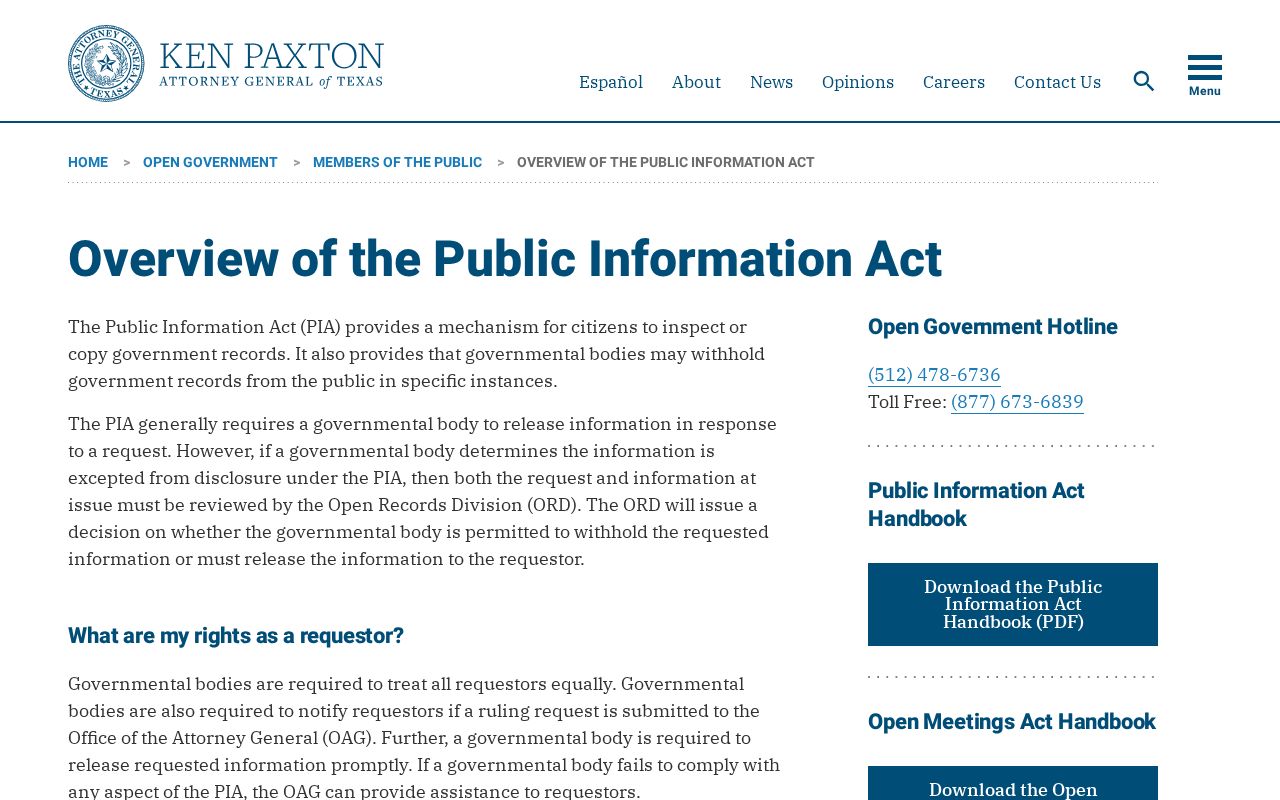
A request should ask for existing records, not a conclusion about a person. If a governmental body cannot produce information within ten business days, the Texas Attorney General overview says it should provide a date and explanation.
The Attorney General’s Public Information Act overview summarizes the statewide access process and exceptions.
The correct custodian matters. County Clerk, District Clerk, Sheriff, Elections, FBCAD, a MUD, a drainage district, and a City department can each hold a different piece of a Rosenberg record trail.
Rosenberg Court and Business Records
Odyssey Public Access covers Fort Bend probate, civil, family, criminal, and calendar routes. Its civil instructions support searching by case, party, attorney, or filed date, then narrowing by status, date, or case type. A court result is a case-history lead, not proof that an allegation is true or that two people with a similar name are the same person. Record the case number, party role, custodian, date, and public disposition before drawing a conclusion.
State business material can provide a different kind of lead. Texas SOSDirect offers entity, assumed-name, people, registered-agent, filing, and document search paths, while County Clerk records remain important for county DBAs. A business role, registered agent, applicant, or licensed person should not be treated as a current home address or proof that someone operates from a parcel.
Texas SOSDirect is the official state route for business-organization search options.
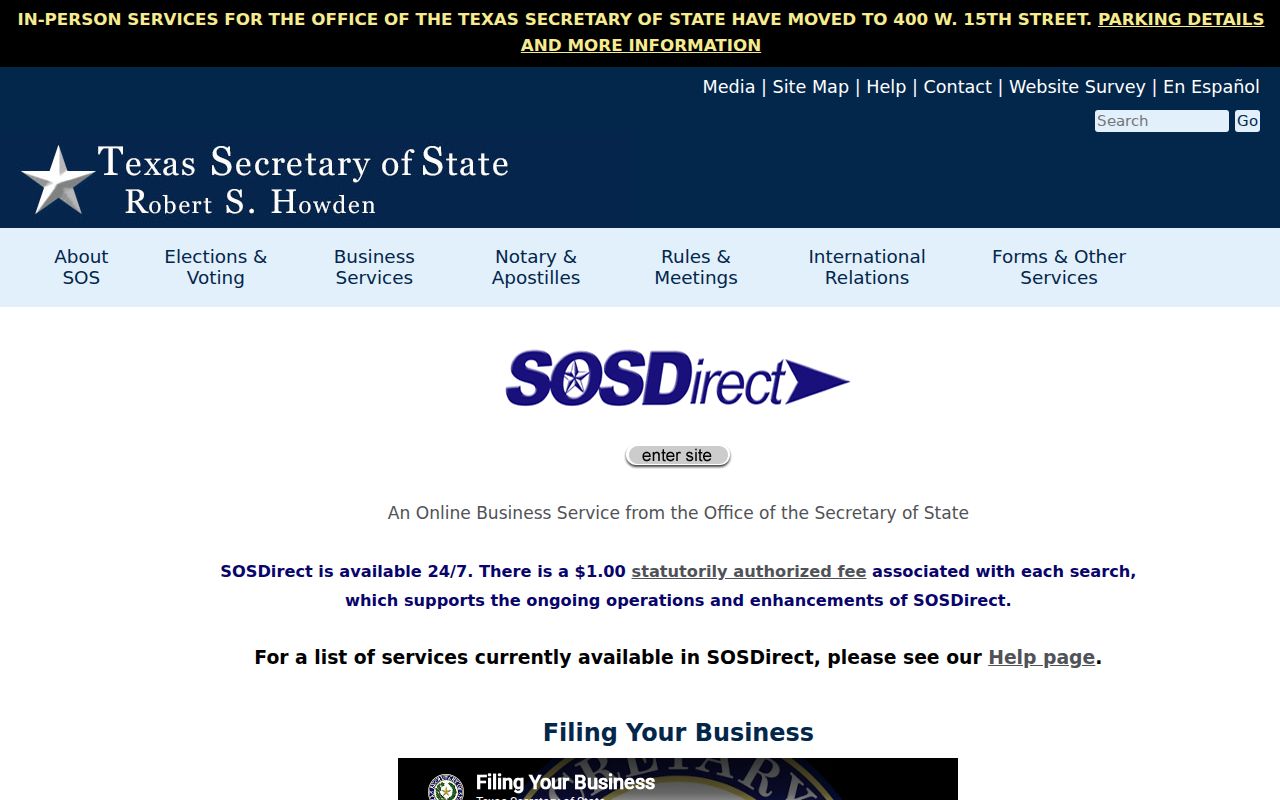
SOSDirect has a $1 search charge in the researched material, with separate copy and certificate charges. Check the current state information before making a paid request or relying on a filed image.
Rosenberg’s resource and department directory helps identify City departments and public contacts by category, first name, or last name.
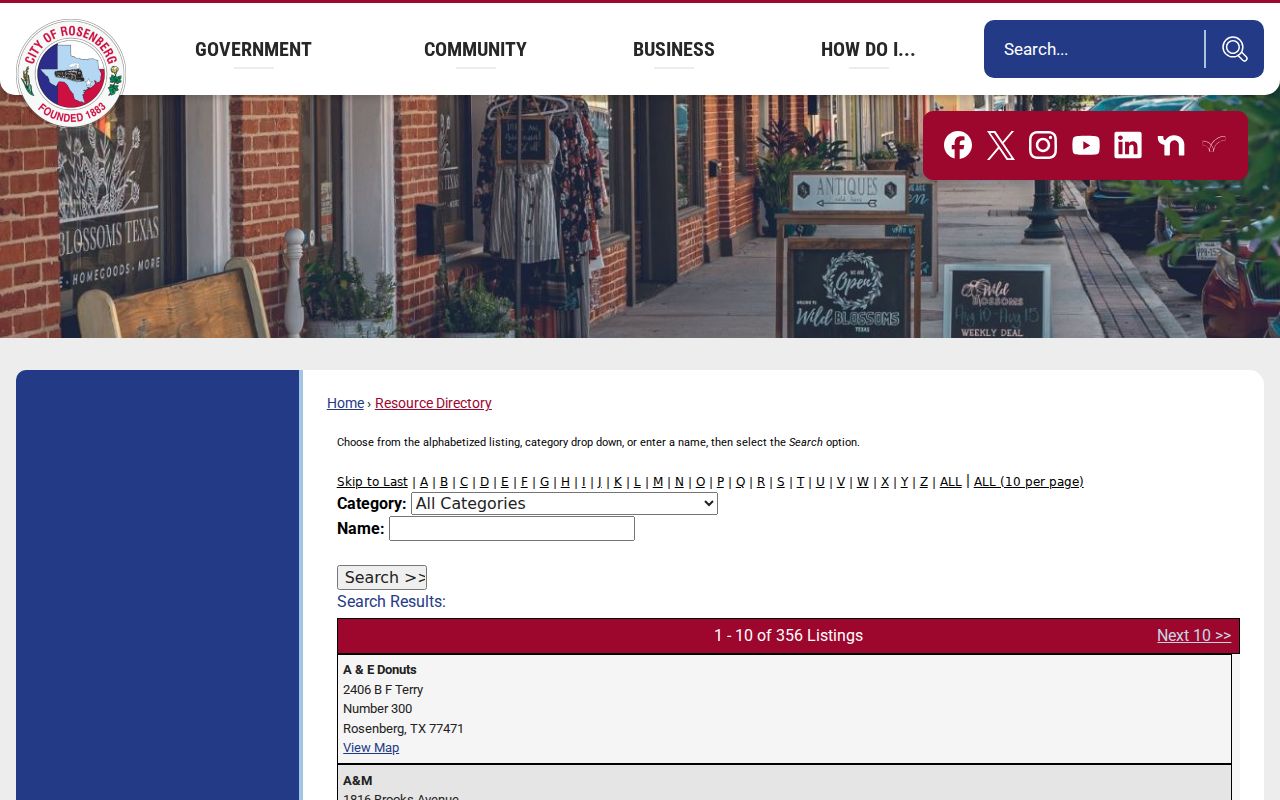
The City directory is a custodian-finding tool. It should not be used to infer a private resident or to turn public staff contact information into a personal record.
Checking Rosenberg Records Safely
Official sources show their custodian, record category, field labels, and access limits. That makes them easier to evaluate even when a result is incomplete. Commercial people-finder categories can offer an apparent shortcut, but a copied address may be old, a name may be merged with another person, and the source or update date may be unclear. Use a commercial result, if encountered, only as an unverified lead and return to the originating office.
| Source category | Useful first question | Key limit |
|---|---|---|
| Official parcel, map, and deed systems | Which property, legal description, or recorded event is involved? | Appraisal or map data does not prove title or current occupancy |
| Official court, voter, and City systems | Which public event, custodian, or request route fits? | Names collide; confidentiality, redaction, and jurisdiction rules apply |
| Commercial people-finder category | Is there a lead worth checking in an originating record? | Data may be stale, blended, incomplete, or unsupported |
- Roll
- A maintained list or record set for one official purpose, such as appraisal or registration, not a complete resident list.
- Index
- A searchable set of entries that points to a record. An index can omit images or details.
- Parcel
- A mapped property unit tied to an identifier and legal description. It is not an occupant roster.
- Criss-cross directory
- A historical reverse directory arranged by address, useful for a past household and subject to year gaps.
Rosenberg Past Household Sources
Older Rosenberg households are best traced through collections rather than a current portal. UT Austin’s Center for American History lists Rosenberg-Richmond city and telephone directory holdings with publisher and issue metadata. The documented city-directory years include 1962, 1968, 1969, 1973, 1974, 1976, 1978, and 1980, while Texas State Library listings add 1982 and 1986. Telephone-directory holdings include 1915, 1918, 1924, 1927, 1930, and 1952.
The George Memorial Library genealogy department adds newspapers, cemetery and burial-record volumes, photographs, biographies, church and cemetery vertical files, census indexes, and local histories. TSLAC’s Fort Bend guide identifies microfilm for tax rolls, early deeds, probate, court records, and naturalization. These sources can establish a historical association with a place, but a directory entry does not prove a person currently lives there.
For directory publishers, known years, and collection access, use the Rosenberg Directory Book. A historic address may need an old street number, lot and block, road name, adjacent landmark, and map source before it matches a current parcel.
Rosenberg Obituaries and Library Clues
The Fort Bend Libraries obituary database contains thousands of Fort Bend-connected records from the mid-1800s to the present. It can be searched by full or partial name, date, keyword, wildcard, Boolean operator, or quoted phrase. Results may provide a name, dates or year, cemetery, notes, newspaper title and date, scan availability, and an O.O.F. notice for an item that must be consulted in person.
For family history, an obituary can be paired with a directory year, cemetery entry, probate case, recorded deed, or newspaper clipping. That pairing helps distinguish people with the same name and keeps a historical claim tied to a source. It does not authorize publication of living relatives’ contact information or a recent restricted vital-record detail.
Note: A library search result is a research lead, so retain the newspaper title, date, scan status, and search terms used.
Rosenberg Privacy and Lawful Use
Texas records have different access rules by record type. Recent birth records are restricted for 75 years and recent death records for 25 years under Government Code §552.115, with qualified-applicant, tangible-interest, or legal-authority rules for newer certificates. Election Code provisions protect specified voter identifiers and regulate voter-list use. The federal Driver’s Privacy Protection Act and Texas Transportation Code Chapter 730 restrict motor-vehicle personal information.
The Texas Address Confidentiality Program can provide an eligible victim of family violence, sexual assault, human trafficking, child abduction, or stalking with a substitute mailing address. Government records may also have law-enforcement, medical, juvenile, victim, or court-protection limits. The fact that a field appears in one historic source does not justify rebuilding sensitive information from other systems.
Texas Government Code Chapter 552 is the statutory text for the Public Information Act.
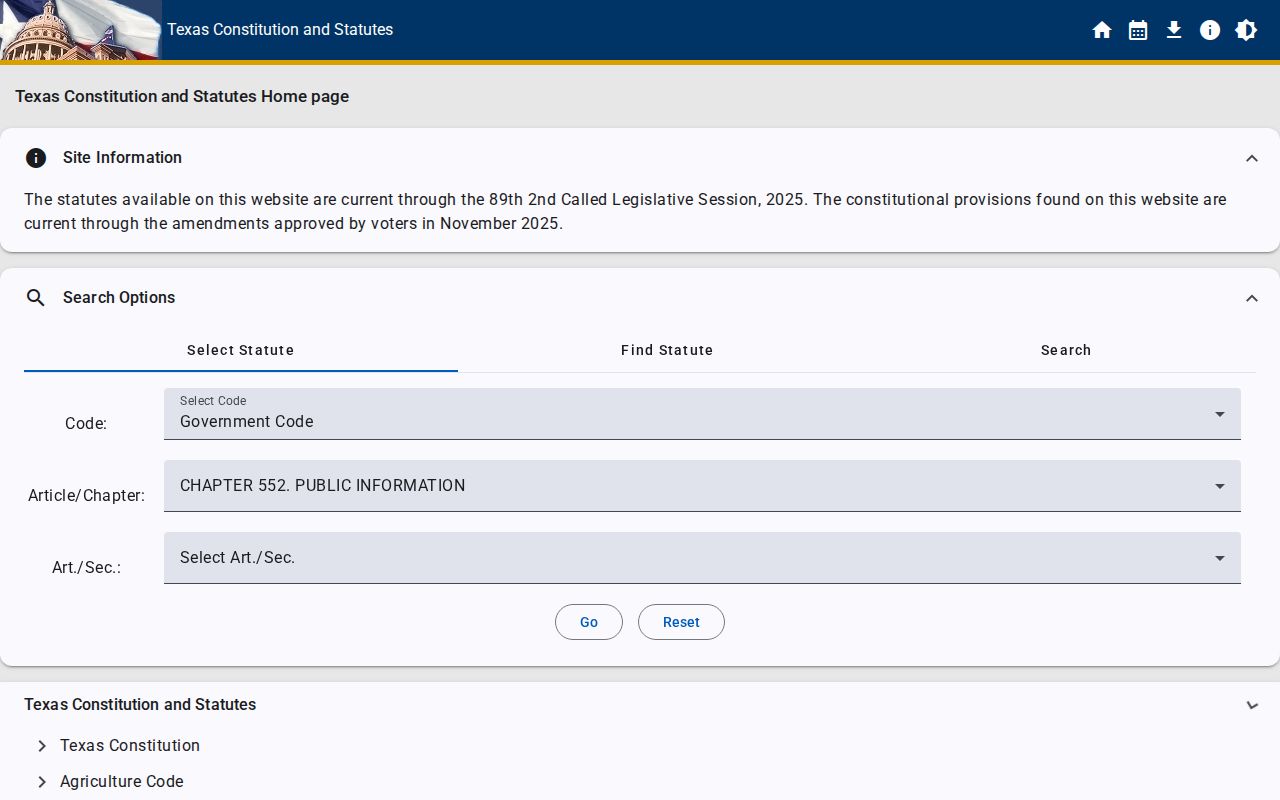
The Public Information Act supports defined requests for existing public records, subject to exceptions. It does not authorize doxxing, impersonation, fraud, stalking, harassment, or compiling private details about a Rosenberg household.
Lawful use. Use public Rosenberg records for family history, estate or heir research, property context, civic transparency, and other lawful personal purposes. Do not use a record trail to stalk, harass, intimidate, or harm anyone.