
Rosenberg Resident Lookup Record Routes
Different records answer different narrow questions. The Fort Bend Central Appraisal District can connect a parcel to its appraisal owner display and mailing field, but it is not proof of present occupancy or title. County courts use Odyssey for case records, while the District Clerk and County Clerk hold different court families. The voter tool is primarily an individual's registration lookup, not an open name directory. Vital records have time limits and qualification rules. A reliable Rosenberg resident lookup marks the custodian and the fact that record can actually establish.
| Record | What It Confirms | Where | Access |
|---|---|---|---|
| Appraisal parcel card | Owner display, mailing field, situs, legal description, and tax context | FBCAD property search | Free public search; not title or occupancy proof |
| County court record | A dated case, party role, event, or order where publicly available | Fort Bend Odyssey Public Access | Public portal; protected documents may be unavailable |
| Marriage or vital route | A Fort Bend marriage-copy request or a state index lead | County Clerk marriage service | Record-family rules and copy requirements apply |
| Historical obituary | Dated death, cemetery, notice, and newspaper-source lead | Fort Bend obituary database | Free search; some items require a department visit |
| Registration inquiry | Personal registration information through the appropriate method | Fort Bend voter inquiry | Individual lookup, not an arbitrary public roster |
Begin with the most stable known fact. An address can start at FBCAD, then move to a legal description or recorded instrument. A case number can start in Odyssey. A death-year question may start with the obituary database and then a state index or probate file. A single common name without an address, date, role, or related record stays only a low-confidence lead.
Rosenberg Resident Lookup Court Fields
Fort Bend's Odyssey portal offers Probate, Civil, Family, Criminal, and Court Calendar routes. The county says login has been disabled since February 15, 2024. A result still needs careful reading because public documents can be incomplete or protected, and the portal warns that filers may fail to redact sensitive material. Search the relevant court family, then record the case number, party role, date, and custodian before deciding whether a result relates to the person sought.
| Civil search modes | Case, Party, Attorney, or Date Filed, with case number or cross-reference where known. |
|---|---|
| Civil filters | All, Open, or Closed status; filed-on and filed-before dates; case types; filed-date sorting. |
| Probate fields | Party name, business or other agency number, Soundex, first/last/middle, status, date range, and case type. |
| Result inventory | Case number, court, case type, filed date, status, party roles, events or orders, financial-field presence, and document availability. |
The Register of Actions is the court's running case-history view. It can show parties, events or orders, and financial information. It does not prove every allegation. For historic probate, current online coverage begins in 1987; earlier volumes A through Z and 1 through 30, with indexes 1 through 3, require historical searching. The District Clerk's historical indexes and minute books add another route for older material.
Fort Bend Odyssey Public Access is the county portal used to begin a court-record search.
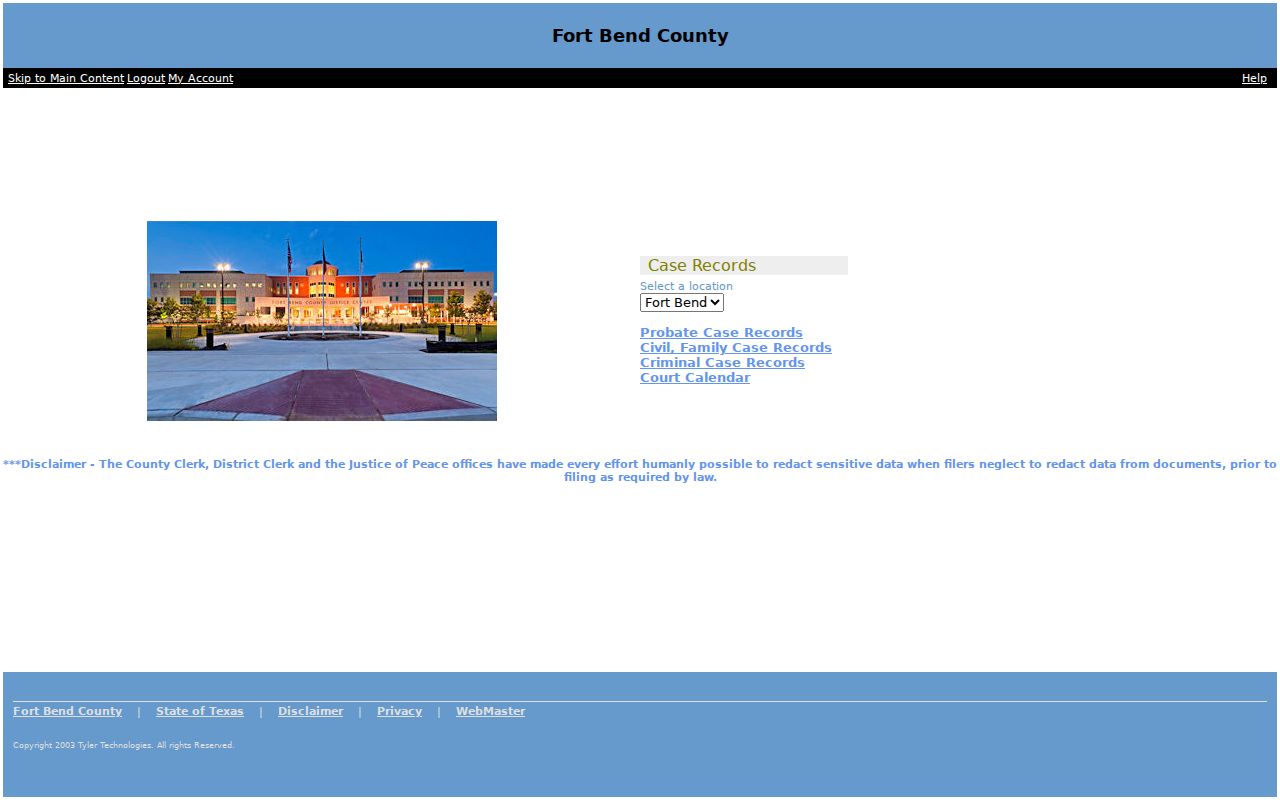
The public court screen is useful for finding the correct case route, but its records need a name, date, role, or case-number cross-check.
The statewide Texas re:SearchTX court repository can search cases, filings, text, and hearings with filters and saved or exported searches. It may require eFileTexas registration and is not a complete criminal-history system. Use the county portal for Fort Bend completeness and re:SearchTX as a separate statewide research path.
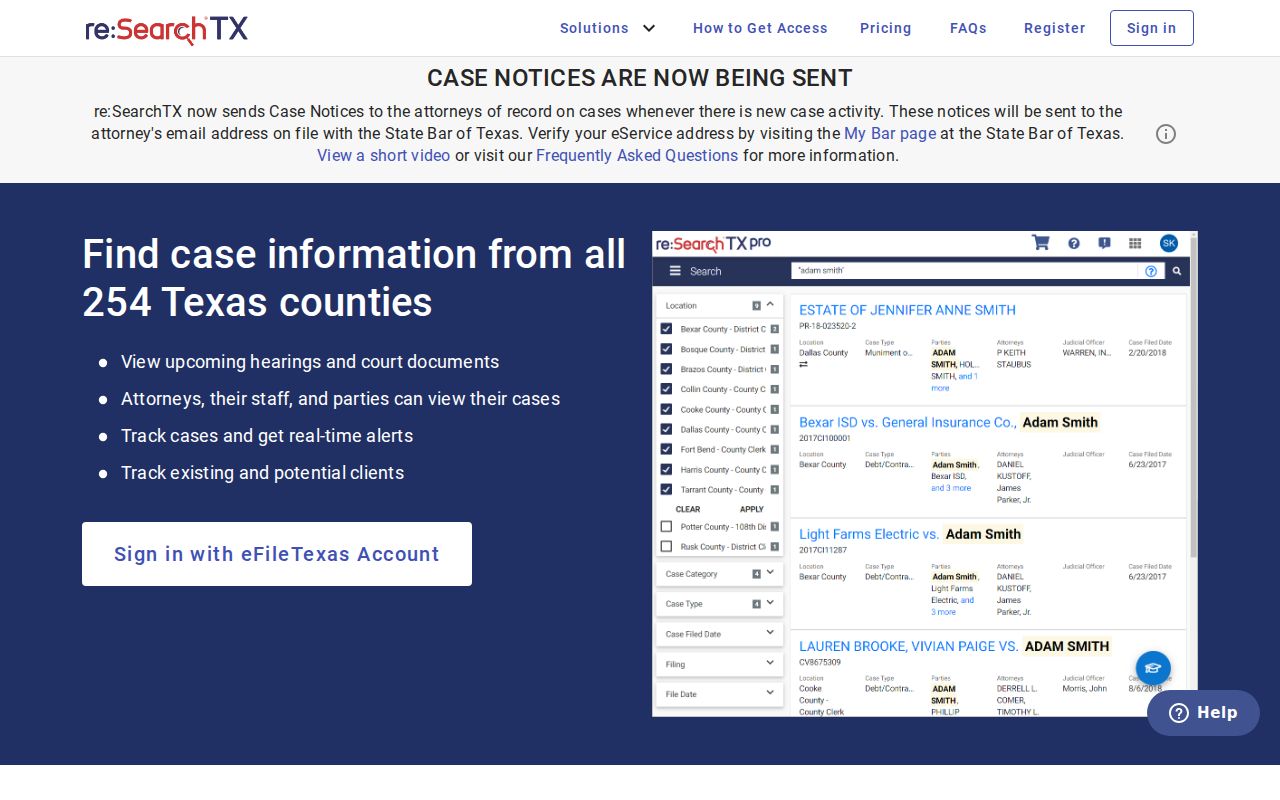
The state search complements a county check, but a missing statewide result does not establish that no court record exists.
Confirming a Rosenberg Resident Record
To look up a resident accurately, build a chain across custodians instead of collecting loose name hits. Keep the owner display separate from a situs address, a mailing address, a court party, a licensee, and a permit applicant. Those roles can belong to different people. The goal is to confirm a dated public-record connection, not to assert where someone lives now. Where a record image or a certified copy is needed, request it from the office that holds it.
- Use FBCAD's owner, address, or Quick Ref ID search to identify the relevant parcel and save the displayed parcel identifiers.
- Compare the situs address, legal description, subdivision, and tax year with County GIS or the County Clerk OPR index.
- Search the name in the appropriate Odyssey route, narrowing with party role, date, attorney, case type, or case number where available.
- Use an obituary, marriage record, probate file, or a dated directory entry only when it provides an independent link to the same person.
- Ask the custodian for a copy or register when the portal is incomplete, and state the record date and source in any research note.
- Docket
- A court's chronological list of actions in a case, often displayed through a Register of Actions.
- Index versus image
- An index points to a record through fields such as name or number; an image is the underlying filed or scanned document when access is allowed.
- Certified copy
- A copy issued and certified by the custodian as an official copy of a record, subject to that office's rules and fees.
Note: A matched name becomes stronger only when a second independent record supports the same dated person, place, or event.
Rosenberg Resident Lookup Name Variants
Name normalization prevents avoidable misses. Try a first and last-name reversal, middle initial, suffix, maiden or former surname, hyphen or space variation, and Mc or Mac variant when the official system supports it. FBCAD specifically notes that McDonald may be indexed as Mc Donald. Its property-search help also recommends simplifying a query when a result does not appear. The obituary database accepts partial names, wildcards, Boolean operators, and quoted phrases, while court and OPR systems use their own rules.
Keep uncertain candidates apart. A marriage license, obituary, deed signature, probate party, court filing, or directory cross-reference can support a name change when it appears in a public record. A shared surname, nearby address, or similarly named business does not establish a family relationship. That discipline is especially important when a Rosenberg resident lookup begins with a common surname.
Rosenberg Resident Lookup Vital Checks
Texas applies different rules to vital indexes and certificate copies. Under Government Code §552.115, birth records become public after 75 years and death records after 25 years. Recent records are limited to qualified applicants, people with tangible interest or legal authority, and authorized agents. A public obituary does not grant permission to obtain a restricted certificate. Texas DSHS offers digital birth and death index routes by event year, name, date, county, and sex, while the event county is not necessarily the person's residence.
Fort Bend's marriage-copy service is limited to licenses purchased or filed in Fort Bend. When possible, find the certificate number in the online marriage index before requesting a copy. The 2024 form lists a $21 certified-copy search and production charge, while the current form and fee schedule should always be checked before payment. Fort Bend local birth and death services run through the County Clerk's annex system, not a Rosenberg city vital-record office.
Fort Bend County's marriage-license copy request identifies the local route for a qualifying Fort Bend marriage record.
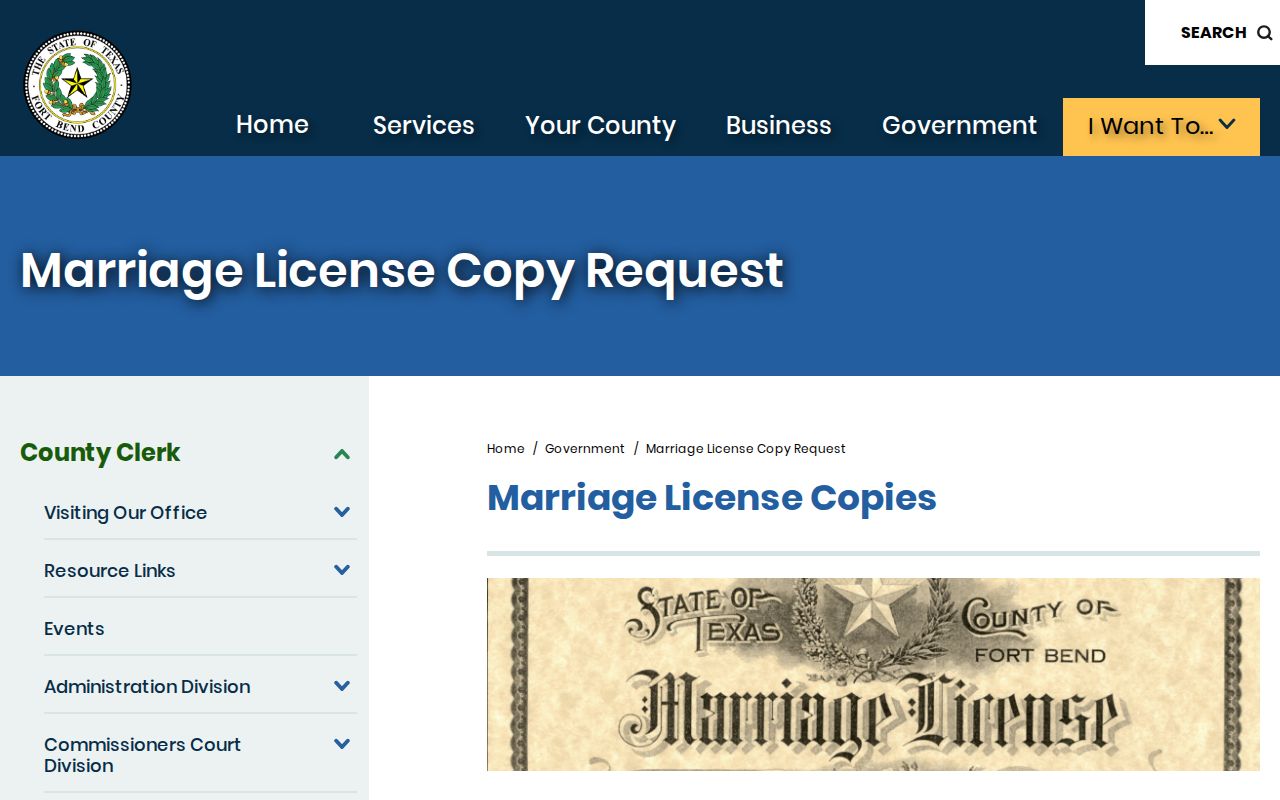
The official request page helps separate a county marriage copy from broader state vital-record index research.
For a historical person, the Fort Bend obituary database can provide a public lead through name, date, cemetery, notes, newspaper title, scan availability, and O.O.F. status. Compare an obituary with a cemetery record, probate record, state index, or a directory. It is an authored notice and may omit facts or use a different name form.
Rosenberg Resident Lookup Custody Checks
Custody systems are status tools, not broad identity files. The Fort Bend Jail Public Inquiry accepts a full or partial last name, a full or partial first name, or both. Clicking a result opens a detail view, but the exact detail fields and historical retention policy were not exposed during the research. Treat any result as a current snapshot and confirm identity with lawful anchors such as age, booking or case information. Do not infer guilt from a booking or a court allegation.
Fort Bend Jail Public Inquiry is the county route for a current jail-status search.
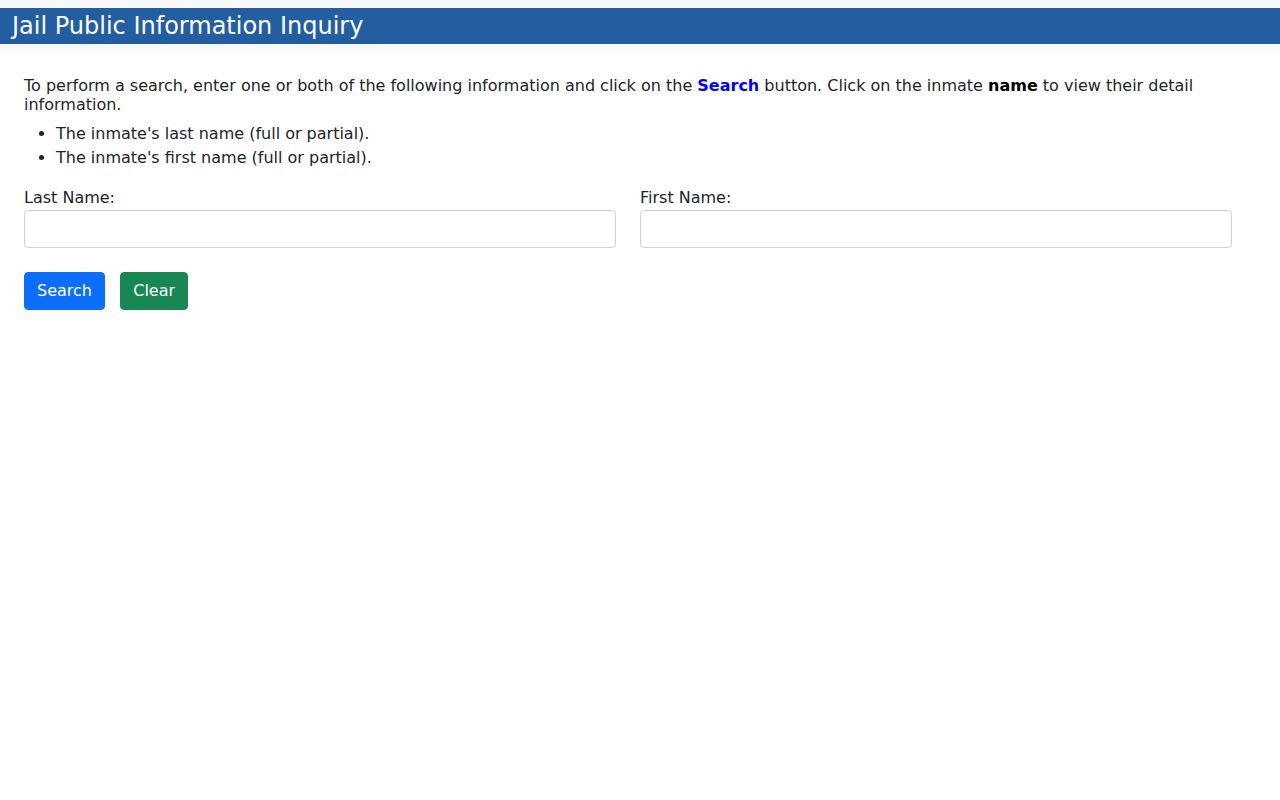
The partial-name fields can help distinguish a current county inquiry from a historical jail or court research request.
The Texas Department of Criminal Justice offender search accepts a name, SID, or current TDCJ number, supports an asterisk wildcard, and has a previous-TDCJ-number route. Its detail may show a name, number, date of birth, custody status, and facility. TDCJ says the data updates about every 24 hours and does not cover people released, held locally, in federal custody, or in another state.
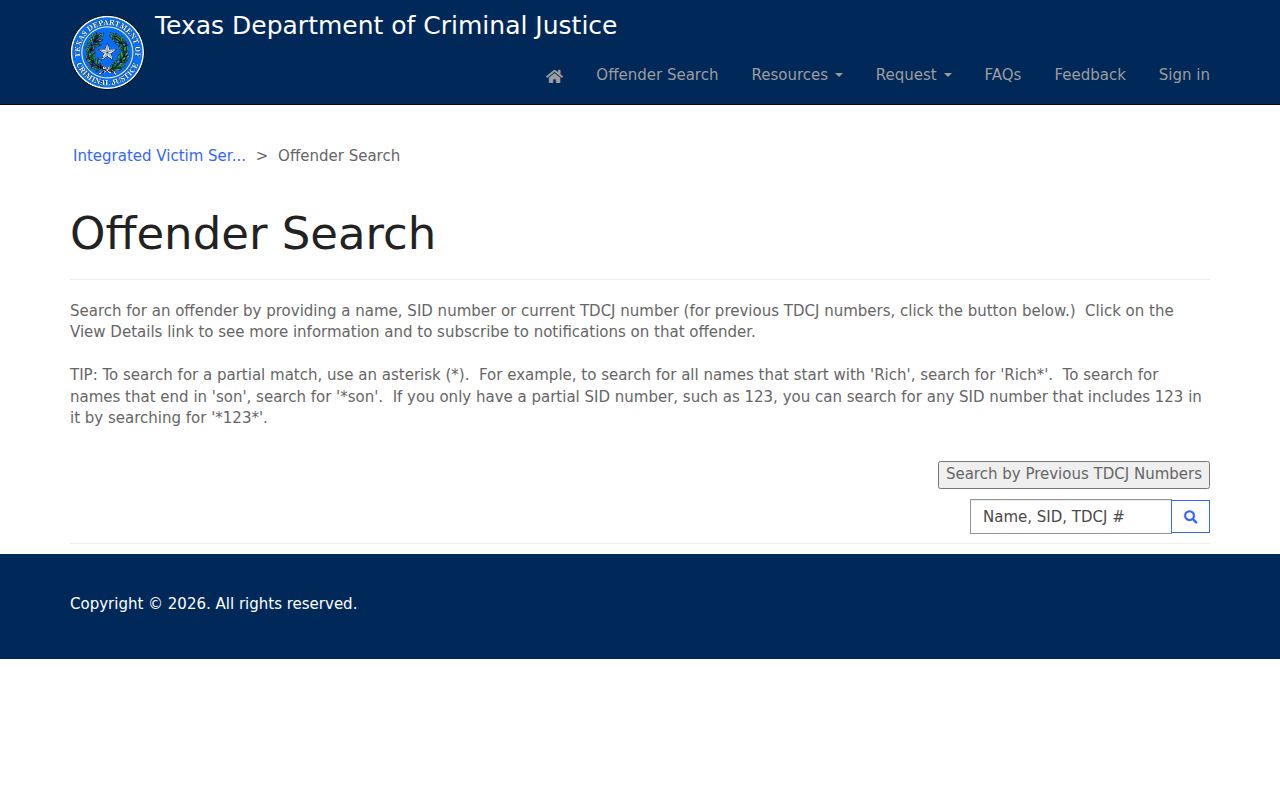
Use a court record for a case disposition and TDCJ for its current custody context, since neither record replaces the other.
Texas Requests for a Rosenberg Resident Lookup
When an official portal lacks the needed document, identify the right holder before sending a request. The Texas Public Information Act, Government Code Chapter 552, covers existing records held by governmental bodies. It does not require an agency to create a database or answer an open-ended research question. The Attorney General says a requester generally does not need to state a purpose, but the request should name a record type, date range, address or parcel, department, and custodian. A governmental body may seek clarification and may redact protected material.
For Rosenberg city records, use the City public-information forms and select Police Records, Municipal Court Records, or General Records as appropriate. County Clerk, District Clerk, Sheriff, Elections, FBCAD, and state agencies each have their own routes. If a body cannot produce records within ten business days, the Attorney General overview says it should provide a date and reason. Programming or manipulation can trigger an estimate under §552.231.
A defined request such as final inspection records for a stated address and date range is easier to route than a request for everything about a person. The correct custodian may hold no record even when another Fort Bend or Texas agency does. Preserve the request date, agency response, and any stated exemption in the research record.
Limits on a Rosenberg Resident Lookup
Public access is record-specific. The county voter inquiry is a personal registration tool, while a statewide voter-list request follows a regulated process with an affidavit and statutory limits. Election Code §13.004 protects Social Security, Texas driver-license, and personal-identification numbers in voter material. The Texas Address Confidentiality Program can provide eligible participants with a substitute address, and protected residences should not be reconstructed from older parcels, court files, voter clues, or directory fragments.
Do not publish full dates of birth, Social Security numbers, VUIDs, driver-license numbers, complete inmate identifiers, protected victim addresses, private phone numbers, or unredacted medical or juvenile material. A public record can become sensitive when accumulated. If an official source is wrong or incomplete, contact the custodian about its correction, sealing, redaction, or confidentiality process rather than repeating the disputed data.
Lawful use. Use Rosenberg resident lookup records for personal, lawful research, family history, public-record verification, or safety-aware record questions. Never use a result to stalk, harass, intimidate, impersonate, or harm another person.
For historic household work, the dated volumes and access limits are described through the Rosenberg directory book. Historical evidence still needs the same care with names, dates, and source boundaries.